Showing posts with label kids. Show all posts

Monday, January 11, 2016

Teaching Dyslexic Kids to Read the Easy Way

Teaching Dyslexic Students to Read WellWhat is the best way for teaching dyslexic kids to read?


When it comes to teaching dyslexic students to read you will need to take a modified approach. Dyslexia is a condition that causes a person to struggle with reading and writing.  It can also cause a person to struggle when they focus, their memory skills, and their organization.  Because of these it is important to help build a student’s self-awareness, cognitive skills, and use modified teaching methods that have a multi-sensory approach. 

 When it comes to teaching dyslexic students to read, the Orton Gillingham approach is one of the oldest and one of the best researched for dyslexia reading programs.  This program was developed in the 1930s by Samuel Torrey Orton and Anna Gillingham and is most often used because of its effectiveness. Some teachers like using the Multi-sensory Structured Language [MSL] approach when helping teach dyslexic students how to read.  This method is often used most for teaching children with dyslexia and it is beneficial for all children.  MSL will teach phonics, comprehension, vocabulary, and accuracy in writing and spelling.  

The student is encouraged to use tough, sight, movement, and sound as a part of this learning process. Through these programs teachers and parents can receive MSL training and certification. When teaching dyslexic students to read BE direct and explicit.  

Explicit means teaching including describing, modeling, breaking the skills down into steps, providing clear instructions and feedback, providing demonstrations, and presenting all the information in a logical order.  

While this may be a tedious step it will greatly help the dyslexic student to understand.  These steps and process must be done until the student masters the skill.  Never assume that the student has any previous knowledge or understanding of the subject matter. 

 It is far better to have to repeat a few steps when teaching a dyslexic student how to read than to forge ahead and have them not understand the material. 

 When teaching dyslexic students how to read be sure to repeat yourself often.  Some dyslexic children struggle with short term memory so they may have difficulty remembering what you said.  Be sure to take extra time to repeat the instructions, key words, and concepts so they will be more likely to remember what you said and write it down. 

 As you build these new skills continue to use any previously learned information.  The repetition will help reinforce older skills. 

 When teaching a dyslexic student how to read you will want to use something known as “diagnostic teaching.”  Be sure to continuously assess how well your student understands what’s being taught.  If something is not understood you should re-teach the skill.  Students with dyslexia, when learning how to read, may require more time and intense instruction to learn.  

When teaching dyslexic students how to read you may have to modify your teaching approach as something may be caught on quickly while another takes some time. Be sure to use time wisely when working with dyslexic students.  Avoid rushing through a lesson as this can confuse them and not make the information stick. During your time of teaching dyslexic students how to read, DO your best to stick to a daily routine.  If you can write down and illustrate each day’s lesson on the wall so the students can see what they can expect each day.  

These routines should include information from previous lessons to help reinforce the lessons. Be sure to use lots of positive reinforcement when helping dyslexic students.  Children with dyslexia may suffer from low self-esteem or feel that they are not as smart as their classmates.  Because of this it is very important to build them up and to use positive reinforcement. There are some programs that are NOT meant for teaching dyslexic students how to read.  This is NOT saying that these programs are bad or ineffective but they are not equipped or meant for teaching dyslexic students how to read. These programs are:


  • Kumon
  • Sylvan Learning
  • Hooked on Phonics
  • Reading Recovery
  • Accelerated Reader
  • Vision Therapy
  • Brain Gym
  • Special Diets

Don’t be afraid to experiment around on what works the best for teaching dyslexic students how to read.  With a little work you will find what works best for teaching dyslexic students how to read!

Saturday, March 22, 2014

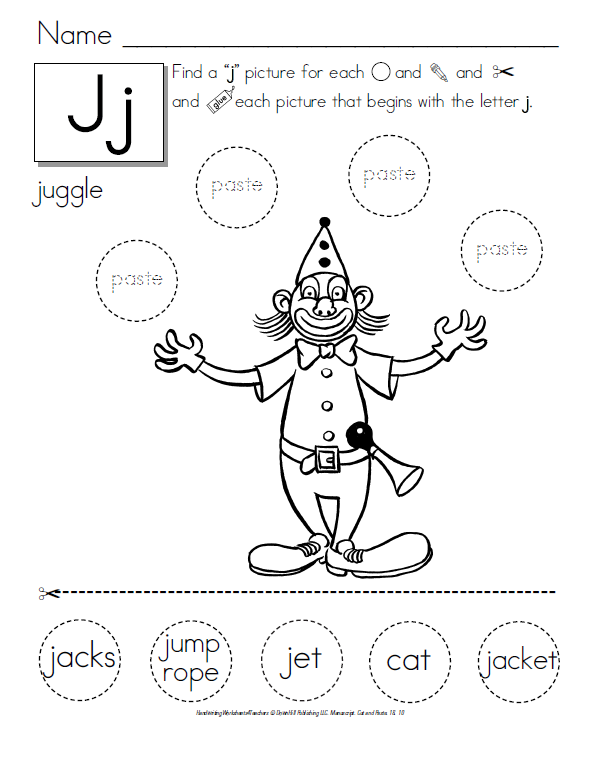
Manuscript Handwriting Practice Worksheets for Kids

Manuscript Handwriting Practice Worksheets for Kids


Manuscript handwriting practice includes more 500 ready-to-print handwriting worksheets divided into 23 categories:
1. Trace Letters
2. Write within the Lines
3. Letter Formation
4. Letter Book
5. Number Words
6. Letter Words
7. More Letters
8. Color Words
9. Calendar Words
10. Tracing & Matching
11. Coloring & Writing
12. Writing Letters
13. Coloring Words
14. Writing Words II
15. Reading & Writing
16. Select Correct Word
17. Writing Correct Word
18. Cut & Paste
19. Pencil Activities
20. Searching Words
21. Writing Words I
22. Flash Cards
23. Certificate

http://www.teacherspayteachers.com/Product/Manuscript-Handwriting-Practice-for-Pre-K-to-3rd-Grade-697593
Activities include tracing, tracking, copying, practice of patterns, the alphabet, capital letters, lower case and many more....

http://www.teacherspayteachers.com/Product/Manuscript-Handwriting-Practice-for-Pre-K-to-3rd-Grade-697593 http://www.teacherspayteachers.com/Product/Manuscript-Handwriting-Practice-for-Pre-K-to-3rd-Grade-697593

Friday, March 29, 2013

Printable Easter Alphabet Letters 4 Kids

A high-resolution, colorful, fully scalable digital Easter Clip-Art Alphabet. Perfect to print large pattern letters for kids, words and titles for all your craft projects and bulletin boards.


No more trying to design your own letters or wasting time creating complex designs in Photoshop. With this ready-to-print Alphabet, you can print the letters directly from the file and then cut and glue it onto objects, paper, fabric, wood or other craft materials. You can also import the Clip-Art Alphabet into your Word document.


 Alphabet Patterns are available by immediate download. Include
upper and lowercase letters, numbers, punctuation and Spanish language characters. Alphabets include 26 letters, capital letters and lower case, as well as punctuation. Over a 100 characters!


PS: This is not a font, but rather a set of images you can either print by themselves, or drag-and-drop one by one to insert them in your Word document.

Monday, March 25, 2013

Free Easter Digital Clipart for Kids {Black/White - Color}

The Easter Clipart collection gives you for FREE 10 graphics you and your students need for Easter decoration, projects and reports. Enhance your bulletin boards, letters, postcards and more with this collection of 10 high-resolution seasonal images!


You can get the whole ClipArt4Teachers collection. 564 black/white and color, high resolution images (JPEG) divided into 22 categories (Personal and Commercial use). Click HERE.


Classroom Freebies Manic Monday

Wednesday, February 27, 2013

Awesome Arts and Crafts Ideas for Kids

As a first grade teacher, I love arts and crafts for my class or even at home with my own twin boys. Students get involved in such a fun and creative way that learning takes place inadvertently. They build up motivation for school, eliminates boredom and creates active thinkers.

First I am going to introduce two activities that I created myself: the first one is the 2 Dimensional Pop Up Alphabet. This activity creates a fun learning experience for your students.


It gets students excited and motivated to learn the alphabet, for reading and writing. These fun and easy 2 Dimensional (2 D)-Pop-up activities are the perfect ones to help guide your students through the learning experience. 


They work well with mainstream students, English learners, and especially recommendable for students with special needs.

The second activity is the My first 3 Dimensional Alphabet Book. It ads a bit more complexity to the task, but still awesome for the younger learner.


Apart from my own creation, I adore making masks..

  
or using beads


Or even paper. Be careful with scissors and glue. They can play tricks on you!


Last, but not least, some recommendations for Amazon. Next you have My Fave Arts and Crafts Books for Kids. The products are unexpensive and they have more activities than you will ever use. 

1) The Todler Busy Book by Trish Kuffner.
365 creative games and activities to keep Your 1 1/2- to 3-Year-Old Busy


2) The Complete Book of Arts and Craft


This Complete Book of Arts and Crafts provides 256 pages of fun activities for children ages 5 to 9 that reinforce creative minds and motor skills! It includes paper, painting, musical, sculpting, and holiday crafts, as well as a complete answer key, user-friendly activities, and easy-to-follow instructions. --Over 4 million in print!
... and 

3)  Summer Bridge Activities


Prevent summer learning loss with our award winning, best-selling summer learning series! Summer Bridge Activities: Bridging Grades First to Second reinforces essential skills across the curriculum and helps prepare children for second grade. With 12 weeks worth of activities, completing Summer Bridge ActivitiesTM is the perfect way to keep skills sharp all summer long!

Do you have a favorite book or activity? Please share with us!


Sunday, February 10, 2013

ABC 2 Dimensional Pop-Up Alphabet Book for Kids


Do you want to create a fun learning experience for your students? Do you want them to get excited and motivated about learning the alphabet, reading and writing? These fun and easy ABC 2 dimensional (2D)-Pop-up activities are the perfect ones to help guide your students through the learning experience. 


 Nothing motivates a young learner more that making his or her own book. Students will take pride in their own pop-up alphabet book knowing that they can share it with family and friends.The extra blank letter pages will allow them to insert words they may need to complete their stories. 


These 2D/pop-up alphabet activities will help students to:
  • Learn the alphabet
  • Improve creative writing
  • Practice the alphabet and its sounds
  • Decorate your classroom by: 
  • Writing student’s names on their desk
  • Create tags and labels for your bulletin boards and learning centers. 

 This set of activities comes with step-by-step instructions as well as a video tutorial, but the purpose is simple: print, cut, color, and glue. Don’t miss this opportunity to teach and learn with excitement.